
Key highlights
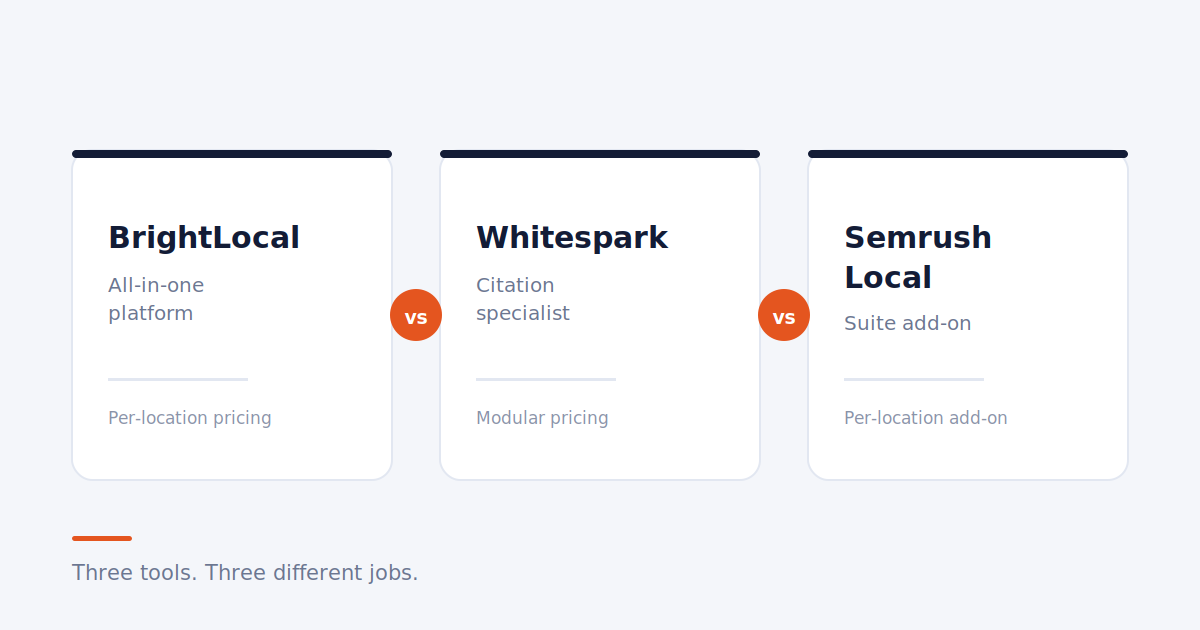
- BrightLocal is the all-in-one, Whitespark is a citation specialist, Semrush Local is GBP automation
- BrightLocal prices in brackets, Semrush Local multiplies per location, Whitespark is modular
- Semrush Local and BrightLocal cost about the same at one location, BrightLocal is far cheaper at ten
- Run the cost at your current client count, then at double, before you commit
If you've asked anywhere whether it's a Facebook group, a subreddit, a Slack channel, which local SEO tool you should be running your client work through, you've heard the same three names. BrightLocal. Whitespark. Semrush Local.
They get recommended interchangeably, which is the problem. They are not competitors in any meaningful sense. They're three different products that happen to share a category label, and picking the wrong one means paying monthly for a toolkit built for someone whose job isn't yours.
Here's what each one is actually for, and how to tell which fits a solo consultant running 5 to 20 client profiles.
The short version
- BrightLocal: the all-in-one. Rank tracking, citations, reviews, white-label reports. Priced in location brackets, so cost per location falls as you add clients.
- Whitespark: the citation specialist. Modular, buy-what-you-need pricing. Excellent at one thing.
- Semrush Local: GBP automation and listing sync, priced strictly per location. Affordable at one location, expensive at ten.
If you only remember one thing: the differences that bite you aren't features, they're pricing shapes. Skip to that section if you're short on time.
BrightLocal: the default, and usually a reasonable one
BrightLocal is built to be the single platform an agency runs client local SEO from. Rank tracking, GBP audits, citation tracking, review monitoring, and the thing agencies actually stay for, white-label reporting.
Who it fits: consultants who want one login instead of four, and who send branded monthly reports to clients.
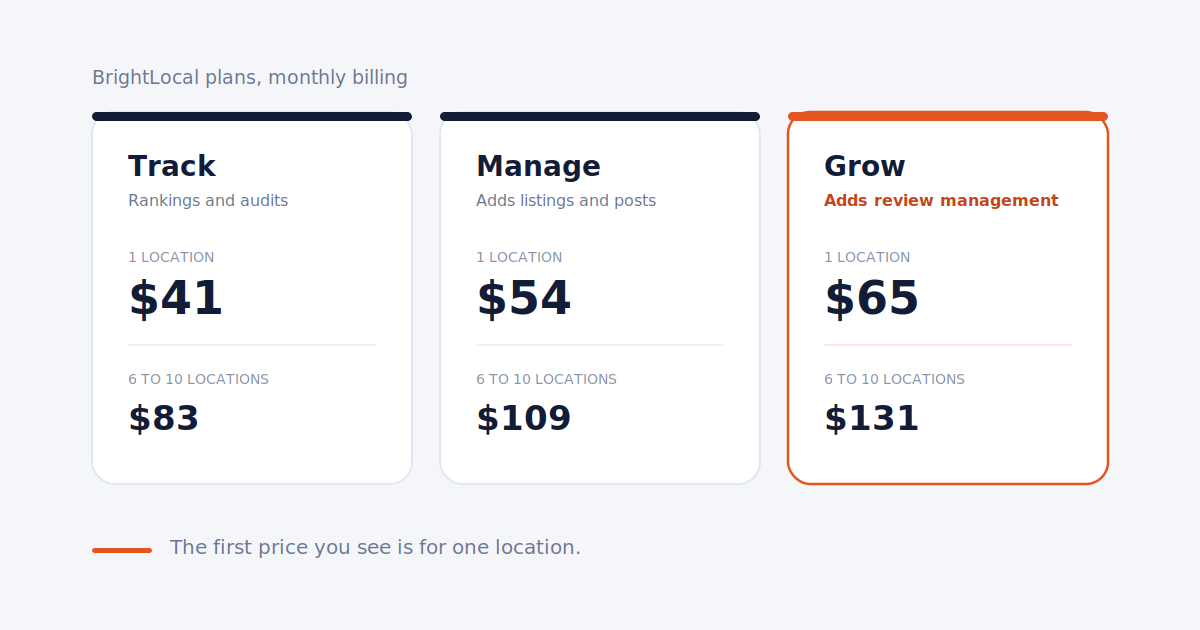
Where it strains: review management sits on the Grow tier, so the real entry price is $65 a month for one location rather than the $41 headline if reputation work is part of your service. There's also more product than most solo operators use, and you're paying for the bundle whether or not half of it gets opened.
Whitespark: the specialist, and only if that's your problem
Whitespark's reputation is built on citation research and building, and it deserves it. If your bottleneck is inconsistent NAP data across directories, nothing else in this list does that job as well. Its rank tracker is solid, and the pricing is modular, so you buy the pieces you want rather than a bundle.
Who it fits: practitioners who already know exactly which functions they need and resent paying for a suite.
Where it strains: it is not a GBP management platform. Review response workflows, posting cadence, and client-facing reporting are either light or absent. If your weekly work is replying to reviews and publishing posts across a dozen profiles, Whitespark isn't solving your actual problem. It's solving a different one very well.
The common mistake: treating Whitespark as a BrightLocal substitute. People do this constantly, cancel two months in, and conclude the tool was bad. The tool was fine. The match wasn't.
Semrush Local: strong at one location, costly at ten
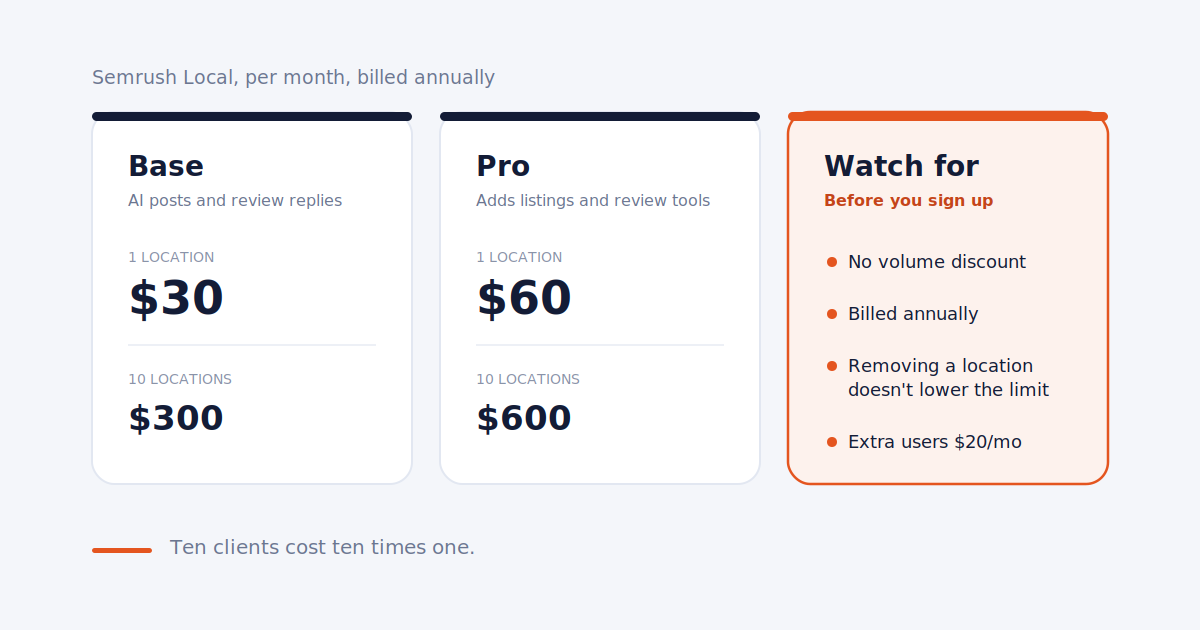
Semrush Local is a standalone product, not an add-on you need a Semrush subscription to reach. Its Base tier includes more automation than most people expect at the price: AI-generated GBP posts, review auto-replies, automated photo posting, and map rank tracking. Listings distribution and full review management sit on the Pro tier.
Who it fits: consultants running one or two locations who want automation working out of the box, and anyone already inside Semrush for organic work.
Where it strains: it's priced strictly per location with no volume brackets, so ten client locations costs ten times one. That's fine at one or two locations, where it costs about the same as BrightLocal, and expensive by the time you're managing ten.
We compared each pair in depth: BrightLocal vs Semrush Local, BrightLocal vs Whitespark, and Whitespark vs Semrush Local.
The pricing shape matters more than the price
This is the part nobody explains, and it's what determines whether a tool is still affordable in a year.
Bracket pricing (BrightLocal's model) means your cost per location falls as you add clients. Ten locations costs less than ten times one.
Strict per-location pricing (Semrush Local's model) means your software bill grows in lockstep with your client count and stays a fixed percentage of revenue forever. Fine at two clients. A real margin problem at fifteen.
Modular pricing (Whitespark's model) means you pay per function. Predictable if your needs are narrow, awkward if they grow.
Flat-tier pricing means one price covers a range of clients, so the cost shrinks as a share of revenue as you fill the tier.
Before you commit to anything, run this: take the monthly cost at your current client count, then run it again at double. If the second number scares you, you're buying a tool that punishes you for growing.
How to choose in one minute
- Citations are your actual bottleneck → Whitespark.
- You run one or two locations, or already pay for Semrush → Semrush Local.
- You manage three or more client locations and send monthly reports → BrightLocal.
- Most of your week is reviews, posts, rank checks, and reports across 5 to 20 profiles, and your margin is the constraint → none of the three is designed for that specific job, which is worth knowing before you pay for one.
That last case is common and badly served. The all-in-one platforms are built for agencies with staff. The specialists solve one slice. A solo consultant doing repetitive per-client delivery work sits in between.
Where Surfa fits
Surfa is built for that gap: reviews, posts, rank tracking, and client reporting for multiple GBPs from one dashboard, priced in flat tiers. It doesn't do citation building, so if that's your bottleneck, Whitespark is the honest answer. It's not a general SEO suite, so if you need keyword research and site audits, that's Semrush.
What it does is cut the per-client hours on the work you repeat every single week.
Frequently asked
Is BrightLocal or Whitespark better? Neither, in the abstract. BrightLocal is a platform, Whitespark is a specialist. If citations are your problem, Whitespark. If you need one place to run and report on client work, BrightLocal.
Is Semrush Local worth it for a freelancer? It depends on your location count. At one or two it costs about the same as BrightLocal and includes solid automation. At ten it costs several times more, because it has no volume brackets.
Which is cheapest for 10 clients? BrightLocal, because of bracket pricing. Run your real client count through each vendor's pricing before comparing headline numbers, since the shapes differ more than the starting prices. We broke down every bracket in BrightLocal pricing.
Can I use more than one? Plenty of consultants do, pairing a management platform with Whitespark for citation projects. Just count the total when you calculate your per-client cost of delivery.
Built for the work you repeat every week.
Reviews, posts, rankings, and reports for every client profile in one dashboard. Flat pricing, not per location.
Start free trial