
Key highlights
- The two cost about the same at one location, BrightLocal is far cheaper at ten
- BrightLocal prices in brackets, Semrush Local multiplies strictly per location
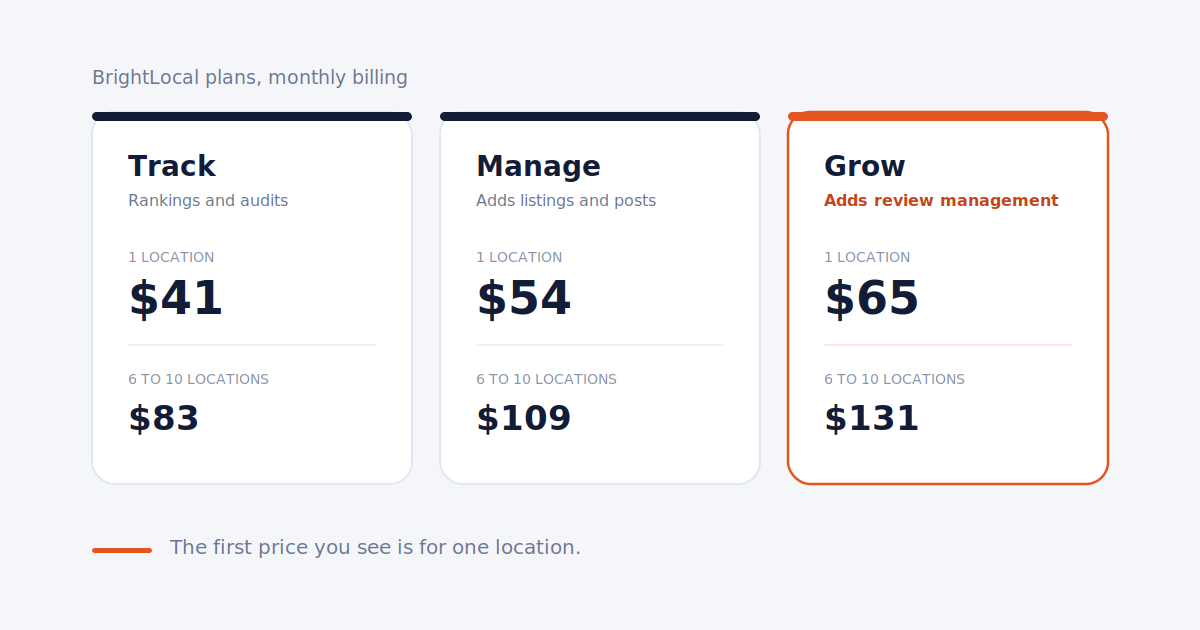
- Review management is BrightLocal's Grow tier, so the real entry price is $65, not $41
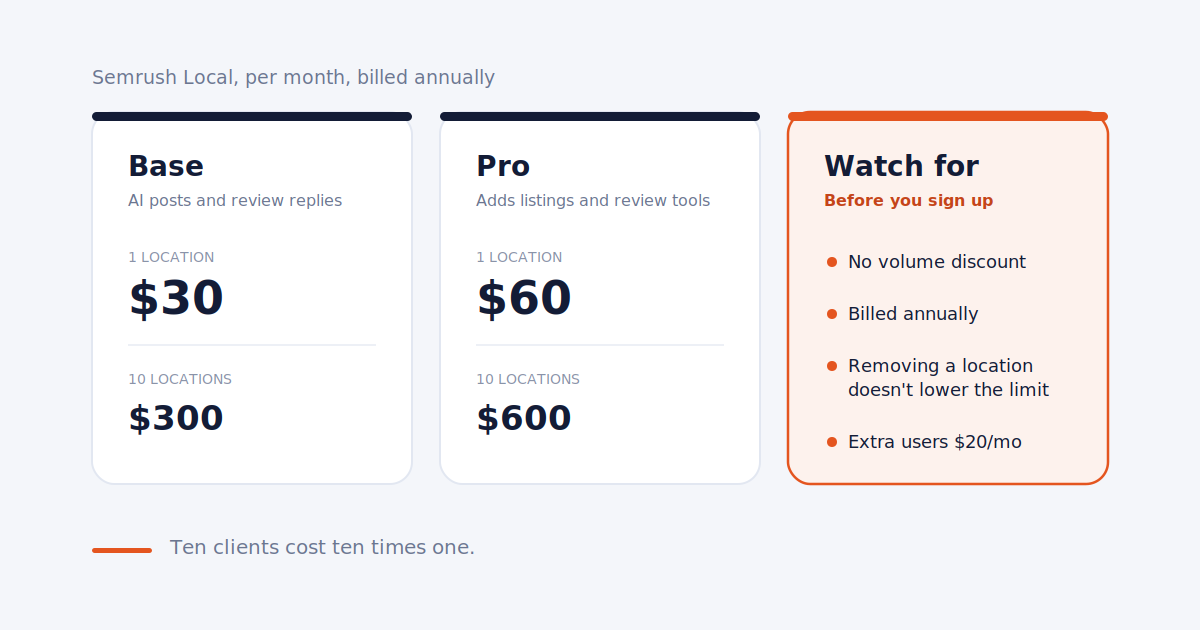
- Semrush Local Base includes AI review auto-replies and GBP posting at $30 per location
BrightLocal and Semrush Local get compared constantly, usually by people who are about to pick the wrong one. Not because either is bad, but because the real difference between them is buried in how they charge, and almost nobody explains it.
Both are sold per location. That sounds like the same thing. It isn't, and the gap gets expensive fast.
Here's the comparison for a freelancer or small agency managing client Google Business Profiles.
The short answer
| BrightLocal | Semrush Local | |
|---|---|---|
| Entry price | $41 a month for one location (Track) | $30 per location (Base, billed annually) |
| Pricing shape | Brackets that flatten as you add locations | Strictly per location, multiplies linearly |
| Review management | Grow tier, $65 for one location | Base has auto-replies, Pro has full management |
| Strongest at | Client reporting, audits, scaling to many locations | GBP automation at the entry tier |
| Weakest at | Nothing outside local SEO | Cost at higher location counts |
| Best for | Three or more client locations | One or two locations |
If you run one or two locations, the two cost about the same and Semrush Local's automation is good. From three locations up, BrightLocal wins on cost, and the gap keeps growing. The rest of this explains why.
The difference that actually matters
BrightLocal prices in brackets. One location on the Grow plan is $65 a month. Six to ten locations on Grow is $131 total, not $65 each. Your cost per location falls as you add clients.
Semrush Local prices strictly per location. Ten locations on Base is $300. On Pro it's $600. There is no volume relief.
At one location they're close. Semrush Local Base is $30 a month, billed annually. BrightLocal Track is $41 month to month, or about $31 a month if you pay for the year. By ten locations, BrightLocal Track is $83 a month against $300 for Semrush Local Base.
The crossover happens at two or three locations. That matters because most freelancers pick a tool when they have two or three clients and then stay on it for years, which is how you end up paying several times more than you need to.
Run your actual client count through both before you decide. The headline price tells you almost nothing.
What you get at each tier
BrightLocal's Track plan is monitoring, auditing, and reporting. Review management sits on the Grow tier, so if replying to client reviews is part of your service, your real entry price is $65 for one location rather than $41.
Semrush Local's Base tier at $30 is more automation-forward than most people expect. AI-generated GBP posts, review auto-replies, automated photo posting, and map rank tracking are all included. Listing management and full review management are on Pro at $60.
So compare the tier you'd actually use. For most consultants doing client review work, that's BrightLocal Grow against Semrush Local Pro, not Track against Base.
Both vendors have changed their prices and lineups recently. Check their own pricing pages before committing.
Rank tracking
Both track local rankings, including map pack positions.
BrightLocal is built around it. Local rank tracking is the core of the product and has been since 2009.
Semrush Local uses a credit system for its Map Rank Tracker: 375 credits on Base, 1,225 on Pro. That's worth checking against how often you actually run checks, because credits are a different constraint than a flat allowance and it's easy to underestimate usage across a client roster.
Review management
BrightLocal monitors reviews across multiple sites and is built assuming you're managing reviews for clients as an ongoing task. It's on the Grow tier.
Semrush Local includes AI review auto-replies even on Base, which is unusual at that price. Full review management and review generation are on Pro.
Neither is really a review response workflow tool in the sense of managing a queue across many clients, but both cover monitoring and basic replies.
Client reporting
BrightLocal's white-label reporting is the feature agencies stay for. Branded, schedulable, and built for sending to clients who aren't marketers.
Semrush's reporting is flexible but designed for a broader audience, and it takes more configuration to produce something a local business owner will actually read.
If you send monthly client reports, this is the clearest advantage BrightLocal has.
Listings distribution
Semrush Local handles this on the Pro tier. It pushes business information out to directories and keeps it in sync.
BrightLocal covers listing sync on the Manage tier and above, and sells citation building separately at a per-citation price. If listings are a big part of what you sell, compare which directories each one covers before deciding.
The deciding question
How many client locations will you be running in a year?
One or two, and the two cost about the same, so pick on features. Semrush Local Base has more automation out of the box. Three, ten, or twenty, and BrightLocal's bracket pricing wins, with the gap widening every time you sign a client.
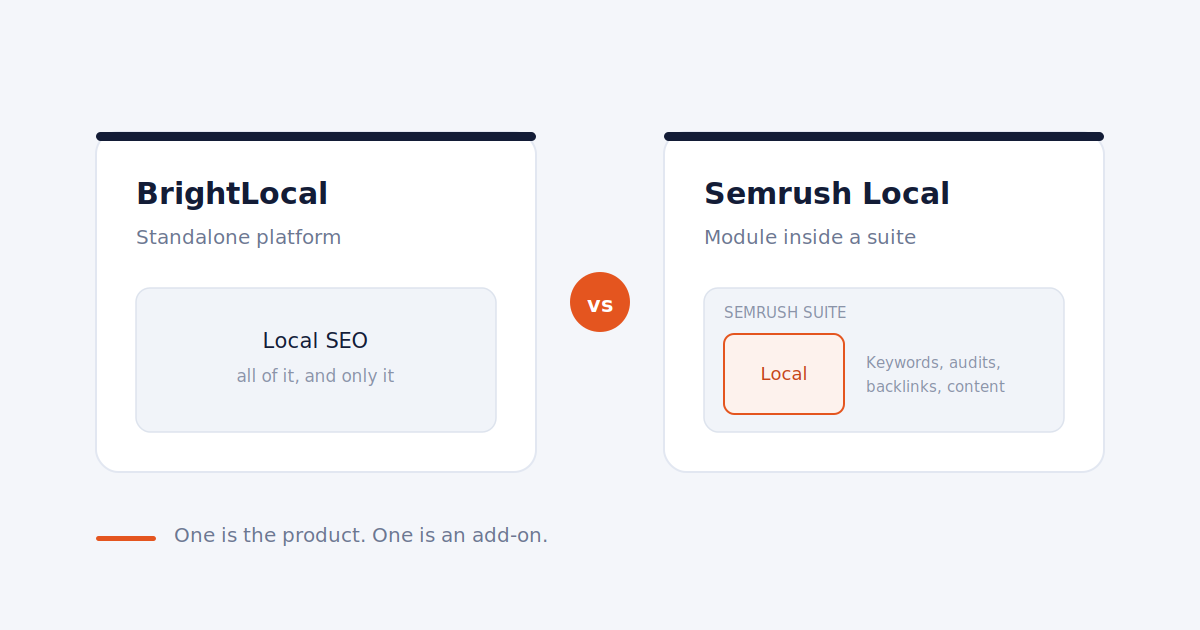
The second question is whether you already use Semrush for organic work. If you do, running local in the same environment has convenience value that doesn't show up in a price comparison.
Who should pick which
Pick BrightLocal if: you manage three or more client locations, you send branded monthly reports, and local SEO is most of your revenue.
Pick Semrush Local if: you run one or two locations, you want GBP automation included at the entry tier, or you already pay for Semrush.
Pick neither if: your week is mostly replying to reviews, publishing posts, and assembling reports across 5 to 20 client profiles. Both of these are built around monitoring and research. Neither is built around doing the repetitive per-client work, which is worth knowing before you pay for either.
Where Surfa fits
Surfa is the third shape. Not a research suite, not a monitoring platform, but a place to do the recurring work. AI-drafted review responses in each client's voice, GBP posting across your roster, local rank tracking, and client-ready reports from one dashboard.
It doesn't do keyword research or backlink analysis. If you need those, that's Semrush. It doesn't do citation building. If that's your bottleneck, that's a specialist tool.
Surfa is priced in flat tiers, starting at $29 a month.
We also wrote a wider comparison including Whitespark: BrightLocal vs Whitespark vs Semrush Local. For a full breakdown of BrightLocal's plans, see BrightLocal pricing.
Frequently asked
Is Semrush Local worth it without a Semrush subscription? Yes. It's sold as a standalone product with its own tiers, and you don't need a Semrush SEO plan underneath it.
Which is cheaper for 10 client locations? BrightLocal, by a lot. Bracket pricing puts ten locations at $131 a month on Grow. Semrush Local charges per location, so ten on Base is $300 and ten on Pro is $600.
Which is cheaper for one location? They're close. Semrush Local Base is $30 a month, billed annually. BrightLocal Track is $41 month to month, or about $31 a month on annual billing. Semrush Local Base includes review auto-replies and AI posting, which BrightLocal's entry tier doesn't.
Can I use both? Some agencies do, using Semrush for organic research and BrightLocal for local delivery and reporting. Count the combined per-client cost before committing.
Which handles multiple clients better? BrightLocal. It's built for agencies with a roster. Semrush was designed around a single brand's SEO, and managing many client accounts inside it is more effort.
A third option, for the work you repeat.
Surfa handles reviews, posts, rank tracking, and reports across every client profile. Flat pricing, not per location.
Start free trial