
Key highlights
- The reviewer is notified when you reply and can still edit their review
- Use details the reviewer shared, except for healthcare and legal clients
- Law firm replies fall under client confidentiality, even after a negative review
- Never offer a discount or freebie in exchange for changing a review
A reply that works for a plumber can get a dentist fined and put a lawyer in trouble with the bar. If you write review replies for clients in different industries, the wording has to change with the client, and so do the rules.
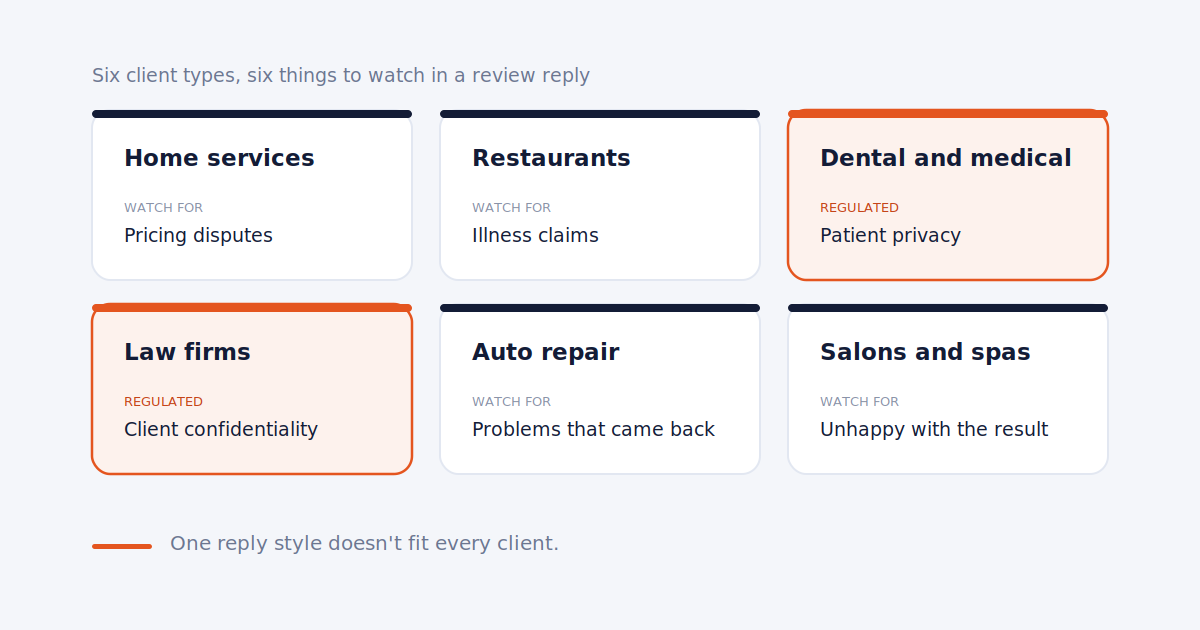
Below are examples for six kinds of clients, with what's different about each one. Treat them as starting points. Change the details every time so the profile doesn't read like a template.
Three things that apply to every client
The reviewer sees your reply. Google notifies the person who wrote the review when you respond, and they can still edit their review afterward. A good reply sometimes turns two stars into four. A defensive one can make things worse.
You're writing for the next customer. Most people reading the reply are deciding whether to call the business. Write for them, not to win the argument.
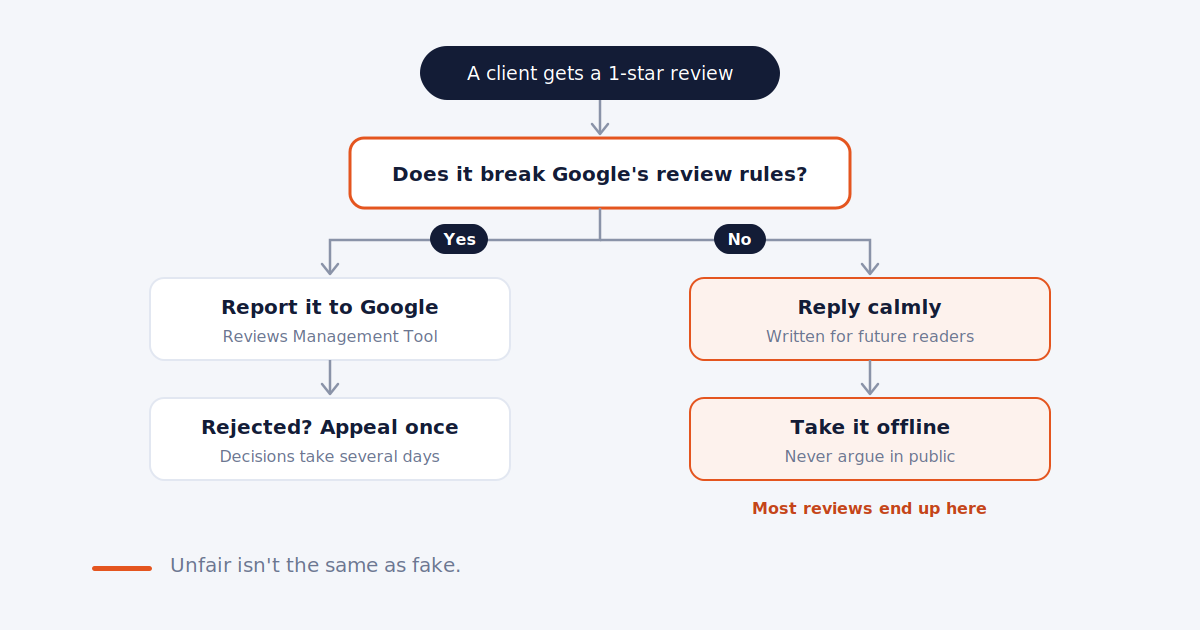
Never offer something in exchange for changing a review. Google's rules prohibit offering discounts, free goods, or services in return for revising or removing a negative review. You can invite someone to get in touch so the business can fix the problem. You can't tie that to the review.
Home services (plumbers, HVAC, roofers, electricians)
Reviews here are about showing up on time, the price, and whether the fix held. Pricing disputes are the most common complaint.
A positive review:
Thanks, Maria. Glad we could get the water heater sorted the same day. Marcus will be happy to hear this.
A complaint about the bill:
Thanks for the feedback, and we're sorry the final bill was a surprise. That's not the experience we want anyone to have. Please call us at [number] and ask for [name] so we can go through the invoice with you.
Avoid: arguing the invoice line by line in public, and mentioning the customer's address or anything about the job they didn't share themselves.
Restaurants and cafes
High volume, short reviews, usually about one visit. Most are about food, service, or the wait. Illness claims are the hard ones.
A positive review:
Thank you! The short rib is a kitchen favorite too. Hope to see you again soon.
A complaint about slow service:
That's longer than anyone should wait, and we're sorry. We'd like to hear more about your visit. Please email [address] so the manager can follow up.
An illness claim:
We take this very seriously. Please contact our manager directly at [number] so we can look into it right away.
Avoid: denying or explaining an illness claim in public, and giving a reason for a bad night unless the client has confirmed it. Don't guess that they were short-staffed.
Dental and medical practices
This is the strictest group. Health privacy rules apply to review replies, and a reply can't confirm the reviewer is a patient, even if they said so themselves. That means no names, no treatment details, and nothing about appointments or billing.
A positive review:
Thank you for the kind words. Our team works hard to make every visit comfortable.
A negative review:
Thank you for sharing this. We'd like the chance to understand what happened. Please call our office manager at [number].
Avoid: repeating anything the reviewer wrote about their visit. We covered this in detail, including real enforcement cases, in how to respond to Google reviews for dental practices.
Law firms
Lawyers have a duty of confidentiality that covers review replies. The American Bar Association addressed this directly in a 2021 ethics opinion. It says a negative review on its own doesn't allow a lawyer to disclose client information, and that lawyers should consider not responding at all. If they do respond, it suggests keeping it to an invitation to talk privately, or a note that professional considerations prevent an online response.
A positive review:
Thank you for taking the time to share this. We appreciate it.
A negative review:
Professional obligations prevent us from responding here, but we'd welcome the chance to talk. Please contact our office at [number].
Avoid: mentioning the case, the outcome, the fees, or anything else about the matter. Rules also vary by state, so let the firm decide its own policy and approve replies before they post.
Auto repair shops
Reviews are about cost, how long the car was in the shop, and whether the problem came back. Repeat problems and safety concerns need the most care.
A positive review:
Thanks, James. Glad the brakes feel right again. See you at the next service.
A problem that came back:
We're sorry the issue came back. That's frustrating, and we want to look at it again. Please call [name] at [number] so we can get the car back in.
Avoid: blaming the customer or the age of the car, and getting into a technical argument in public.
Salons, spas, and med spas
These reviews are personal. They're about how someone looks and feels, and they often name the stylist. Complaints are usually about the result.
A positive review:
Thank you, Priya! Dana loved doing your color. Enjoy it!
Unhappy with the result:
We're sorry you're not happy with how it turned out. We'd like to fix that. Please call the salon and ask for [manager] so we can book a time that works for you.
Avoid: defending the work or suggesting the client asked for it that way. One more caution: med spas that offer medical treatments may fall under health privacy rules. When in doubt, reply the way you would for a medical practice.
Keeping this straight across clients
The practical problem isn't knowing these rules. It's remembering which ones apply when you're working through thirty reviews across twelve clients.
Three habits help:
- Keep a short voice note for each client that includes what's off limits. For a dental or legal client, that note matters more than the tone guidance.
- Send negative replies for regulated clients to the client first. They carry the legal responsibility for what gets published.
- Use details only when the reviewer shared them first, and not at all for healthcare and legal clients.
We covered the full workflow in how to manage Google reviews for multiple clients. If a review looks like it didn't come from a real customer, see what to do when a client gets a fake Google review.
Frequently asked
Can I use the same reply template for every client? You can reuse the structure. The wording and the rules have to change by client, especially for healthcare and legal clients.
Is it okay to use the reviewer's name? For most businesses, yes. It's already public on the review. Skip it for healthcare and legal clients.
Can I mention the service the reviewer described? For most businesses, yes, if they mentioned it first. Not for healthcare or legal clients, where repeating it can confirm private information.
Can I offer a refund or discount in the reply? Don't offer anything in exchange for changing or removing a review. Google's rules prohibit that. Invite the reviewer to contact the business and let the client handle it privately.
Who should approve replies for regulated clients? The client. They know the context and they're responsible for what's published under their name.
This is general guidance, not legal advice. Clients in regulated fields should check with their own compliance or legal contact.
A different voice for every client.
Surfa drafts review replies in each client's voice across your whole roster, and you approve them before they post.
Start free trial